

A FAMILIAR TARGET
A DIFFERENT MOLECULE
PDE4 inhibition has been shown to calm neuroinflammation and protect neurons in models of brain injury and disease.
WHY PDE4 MATTERS, AND WHY CNS DEVELOPMENT STALLED.
PDE4 emerges
Researchers connect PDE4 inhibition with increased intracellular cAMP and broad anti-inflammatory effects.
Rolipram teaches the limit
CNS activity appears promising, but nausea and vomiting constrain dosing and development.
The class validates
Roflumilast, apremilast, and crisaborole establish PDE4 as a druggable target in peripheral inflammatory disease.
The CNS opportunity remains
A brain-optimized molecule with a usable therapeutic window could revisit the class across neurological disease.
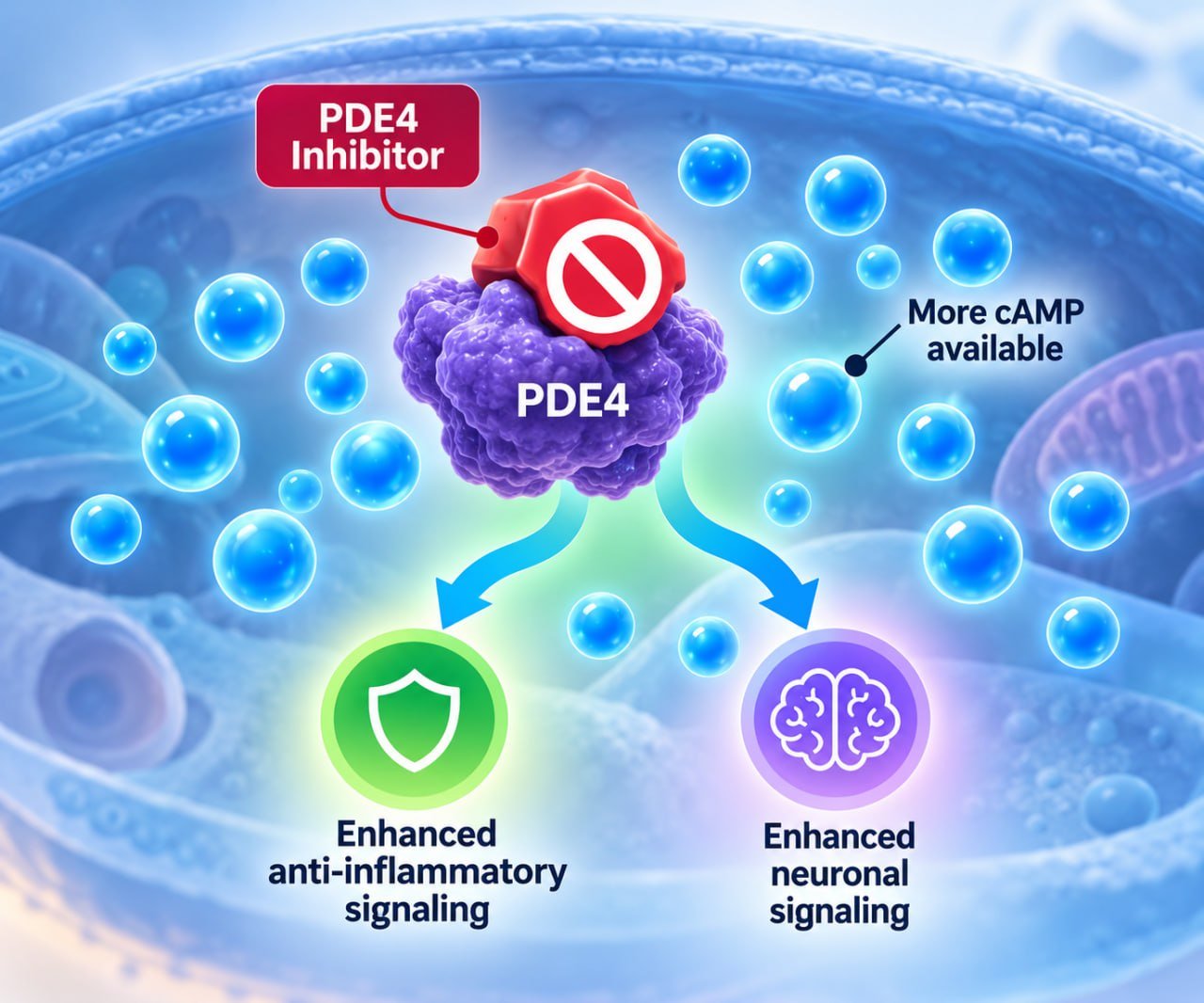
PDE4 ACTS LIKE A BRAKE ON CAMP SIGNALING.

PDE4 breaks down cAMP inside cells.
Blocking PDE4 can amplify anti-inflammatory and neuronal signaling.
DISCOVERY QUESTION
Could a PDE4 inhibitor retain the biology of the class while improving brain exposure and tolerability?
MOLECULE DESIGN
Academic medicinal chemistry by Prof Corey Hopkins’ team at UNMC produced a new family of small molecules optimized for CNS exposure and a differentiated PDE4 binding profile.
TRANSLATION
Goldenrod advanced the compound through pharmacology, PK, tolerability, and disease-model studies to prepare for IND-enabling development.
FROM ACADEMIC DISCOVERY TO CLINICAL CANDIDATE
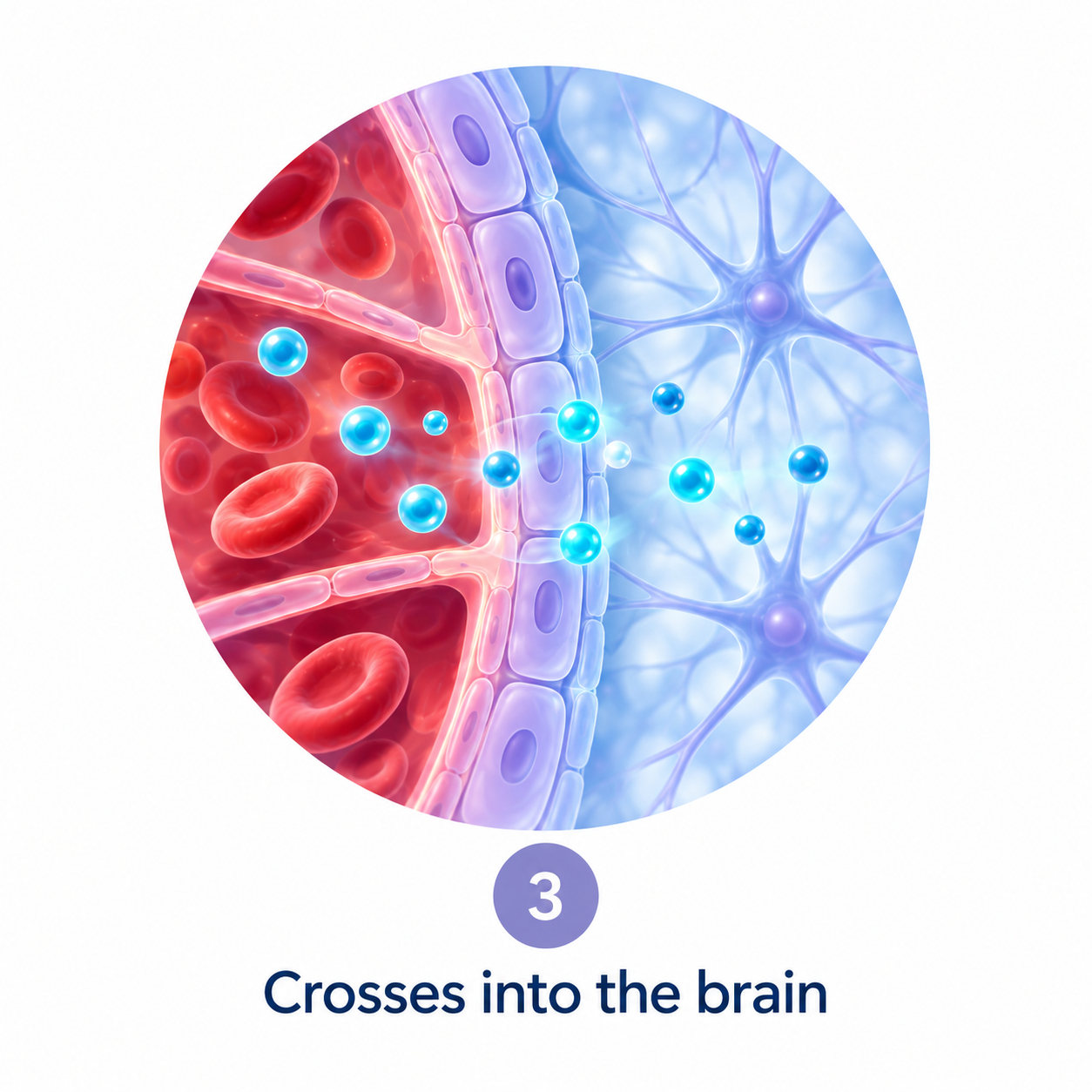
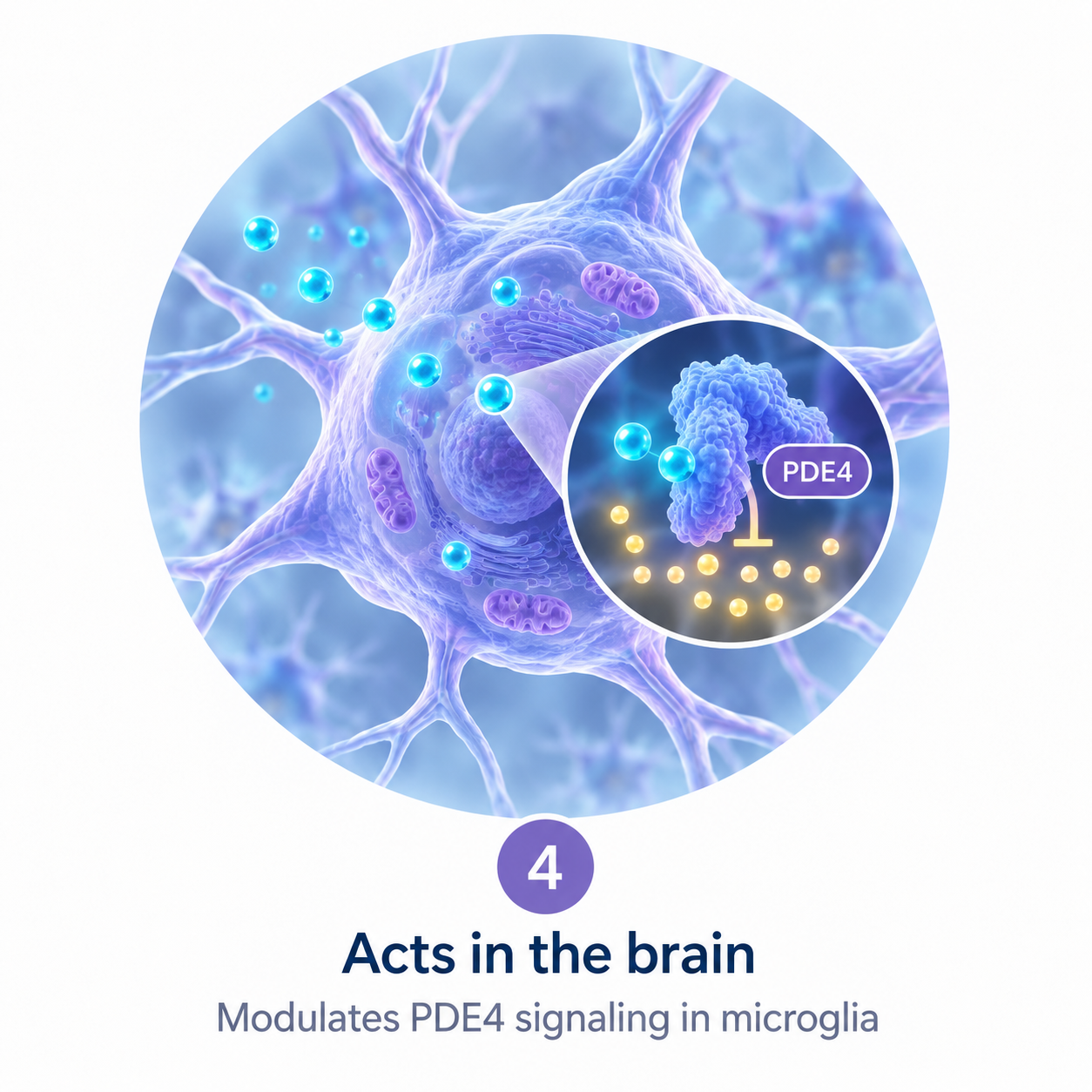
A SAFETY PACKAGE BUILT AROUND THE CLASS’S CENTRAL QUESTION
QUESTION
EVIDENCE
Tolerability
Single and multiple ascending dose studies in rodents
Emesis liability
Ferret emesis study
Cardiac safety
hERG and broader cardiac ion-channel profiling
Drug interactions
CYP450 inhibition panel
Genotoxicity
Ames mutagenicity assay
Off-target liability
Off-target binding assay to 150+ targets
A GROWING BODY OF EVIDENCE
Toxin-induced neuroinflammation
Fannin / National Institute on Aging
DISEASE MODEL
COLLABORATOR
Toxin-induced neuroinflammation
Collaborator: Fannin / National Institute on Aging
Friedreich's Ataxia
Collaborator: Claude Bernard University Lyon 1 (NeuroMyoGene Institute)
Friedreich's Ataxia
Claude Bernard University Lyon 1 (NeuroMyoGene Institute)
Alzheimer's disease
Collaborator: UT Health San Antonio (Glenn Biggs Institute for Alzheimer's and Neurodegenerative Diseases)
Alzheimer's disease
UT Health San Antonio (Glenn Biggs Institute for Alzheimer's and Neurodegenerative Diseases)
Multiple sclerosis
Collaborator: Fannin / Johns Hopkins University
Multiple sclerosis
Fannin / Johns Hopkins University
Cocaine use disorder
Collaborator: University of Nebraska Medical Center (Department of Pharmaceutical Sciences)
Cocaine use disorder
University of Nebraska Medical Center (Department of Pharmaceutical Sciences)
Opioid use disorder
Collaborator: Temple University (Lewis Katz School of Medicine)
Methamphetamine use disorder
Temple University (Lewis Katz School of Medicine)
Opioid use disorder
Temple University (Lewis Katz School of Medicine)
Methamphetamine use disorder
Collaborator: Temple University (Lewis Katz School of Medicine)
Traumatic brain injury
In house
Traumatic brain injury
In house
Post-surgical pain
Collaborator: Temple University (Lewis Katz School of Medicine)
Post-surgical pain
Temple University (Lewis Katz School of Medicine)
Batten disease
Collaborator: Sanford Research / Baylor College of Medicine
Batten disease
Sanford Research / Baylor College of Medicine